A herniated disc may be causing your persistent back pain, uncomfortable tingling in the arms and weakness in the legs. Are you tired of these symptoms? Do you feel stiff, and have simple daily activities become a challenge? A herniated disc can be the culprit behind this condition, but successful treatment is possible even without surgery.
If you are one of those people who put off going to the doctor, you should know that it is not necessary to endure a painful condition for months or years. In that case, you risk the pain becoming chronic, when treatment is considerably more demanding and lengthy.
You surely know or have heard that even after recovery, the pain most often returns after a certain time. Why this is so, what the lasting solution is, what the symptoms are, what the treatment looks like and how long it lasts are the most frequent questions our patients ask. We give you the answers in the text below.
As the name itself suggests, a herniated disc is a disease of the disc. And what are discs? Together with the vertebrae, the discs are an integral part of our spine, that is, the spinal column. The discs are an elastic connection between the vertebrae and look like soft pads. Since the vertebrae are made of bone, the role of the discs is to prevent them from rubbing against each other and, in that way, to protect them. Without the discs, our spine would not be mobile and flexible. The muscles that attach to the spinal column also help in this. To understand the disease, it is important to mention that the spinal cord runs through the middle of our spinal column, and from it branch the nerves.
A herniated disc occurs when the softer part of the disc pushes through the outer part of the disc, which in certain cases may irritate the surrounding nerves. It is precisely this pressure on the nerves that causes back pain, tingling in the arms and legs, or weakness in the arms and legs. The intensity of the pain will depend on the strength of the pressure. However, it does not have to be that way, and you can live with a herniated disc without feeling any discomfort. Statistics show that among 1,000 people, 700 suffer from this condition, and of those, 300 feel no symptoms at all.
A herniated disc is most often the result of gradual wear, that is, degeneration of the disc during the natural aging process. Over the years, our discs lose fluid, which makes them more prone to damage and less flexible. That is why we say it is a degenerative disease. This process can gradually lead to even minor strain and simple movements becoming demanding and painful. However, if a herniated disc develops due to aging, why do some people get it and others do not?
In a large number of cases, the exact cause of a herniated disc cannot be determined. Sometimes improper lifting and relying on the back muscles instead of the leg and thigh muscles can lead to the development of the disease. Twisting or turning while lifting is also risky. In addition, a fall or a blow can lead to the onset of this condition.
Excess weight creates additional pressure on the lower spine, just as prolonged sitting does. Occupations that are physically demanding and often involve lifting and pushing heavy objects carry a greater risk factor. Genetics can also be a reason for the onset of the disease, but in a small percentage, accounting for 1-2% of cases.

A herniated disc most often occurs in the lower back, also called the lumbar part of the spine, and in the neck region (the cervical part of the spine). Somewhat less often it can occur in the middle part of the spine (thoracic). Depending on which part of the spine it affects, a herniated disc can cause:
A herniated disc mostly affects the lower part of the spine and only one side, the left or the right. That is why the pain spreads into the leg on the side where the nerve is compressed. In that case we speak of lumbar pain syndrome. It occurs equally in both sexes and is mostly treated with physical therapy.
The symptoms of thoracic syndrome are pain or a stabbing sensation in the middle of the back, pain spreading toward the chest, and pain during deep inhalation.
A herniated disc in the neck, that is, cervical pain syndrome, usually begins with neck pain with or without spreading into the head, shoulders and arms. The pain usually affects only one arm because the pressure on the nerves is present on one side. The pain spreads toward the shoulder blade and between the shoulder blades, and you may feel shoulder pain as well as pain in the armpit. From the very beginning or as the disease progresses, signs of damage to the spinal cord and damage to the nerve (roots) may appear. Then weakness, numbness, tingling or clumsiness of the arms occurs. In some cases, dizziness, general instability of the body, ringing in the ears, vision impairment and difficulty swallowing may appear.
The symptoms that most often occur with a herniated disc are described below.

If your neck or back pain travels down your arm or leg, if you feel tingling, stiffness or weakness, be sure to see a doctor. The doctor will check the sensitivity of your back, your muscle strength and your reflexes. They will also review your medical history.
If necessary, the doctor may request an X-ray that can help rule out other causes of the disease, but it cannot detect a herniated disc. A CT scan allows a cross-sectional view of the spine and the structures around it. To determine which discs are affected, magnetic resonance imaging (MRI) can be used, while myelography shows whether there is pressure on the nerves and the spinal cord. Electromyoneurography (EMNG) helps to determine the location of the damaged nerve.
Most people diagnosed with a herniated disc do not need surgery to solve this problem. Conservative treatment mostly involves the use of medication, avoiding painful positions and exercises. The symptoms should subside within a few days or weeks.
Various pills are used in the treatment of a herniated disc. In the case of mild pain, painkillers such as ibuprofen or naproxen are used. If the pain does not decrease, narcotic medications from the oxycodone-acetaminophen group can be used for a short time. They are issued by prescription and can potentially cause negative effects. Anticonvulsant medications can be used to treat stiffness, and muscle relaxants to relax the muscles. Corticosteroids in the form of medications or injections can also be helpful.
A very small number of people need surgical intervention. Surgery is performed in the case of numbness, weakness, poor bladder control, or when physical therapy has not produced results. In many cases, only the protruding part of the disc is removed, and rarely the entire disc.
The most common fear of patients who must undergo spinal surgery is whether they will remain immobile after the operation. It is important to emphasize that with a modern approach and modern technology, this probability is reduced to a minimum. Successful operations are performed at the Military Medical Academy and many other clinics, and we certainly advise you to seek the opinion of several doctors so that you can be sure surgery is the only solution.
If spinal surgery is necessary, you are surely wondering how long recovery after herniated disc surgery takes. Today, laser surgeries under local anesthesia are mostly performed. Two weeks after the operation, the patient begins exercises aimed at stabilizing the trunk. Prolonged sitting after herniated disc surgery is not recommended.
The total duration of recovery for such operations is between two and three months. For operations performed due to numbness and muscle weakness, most patients recover within a period of up to six months.
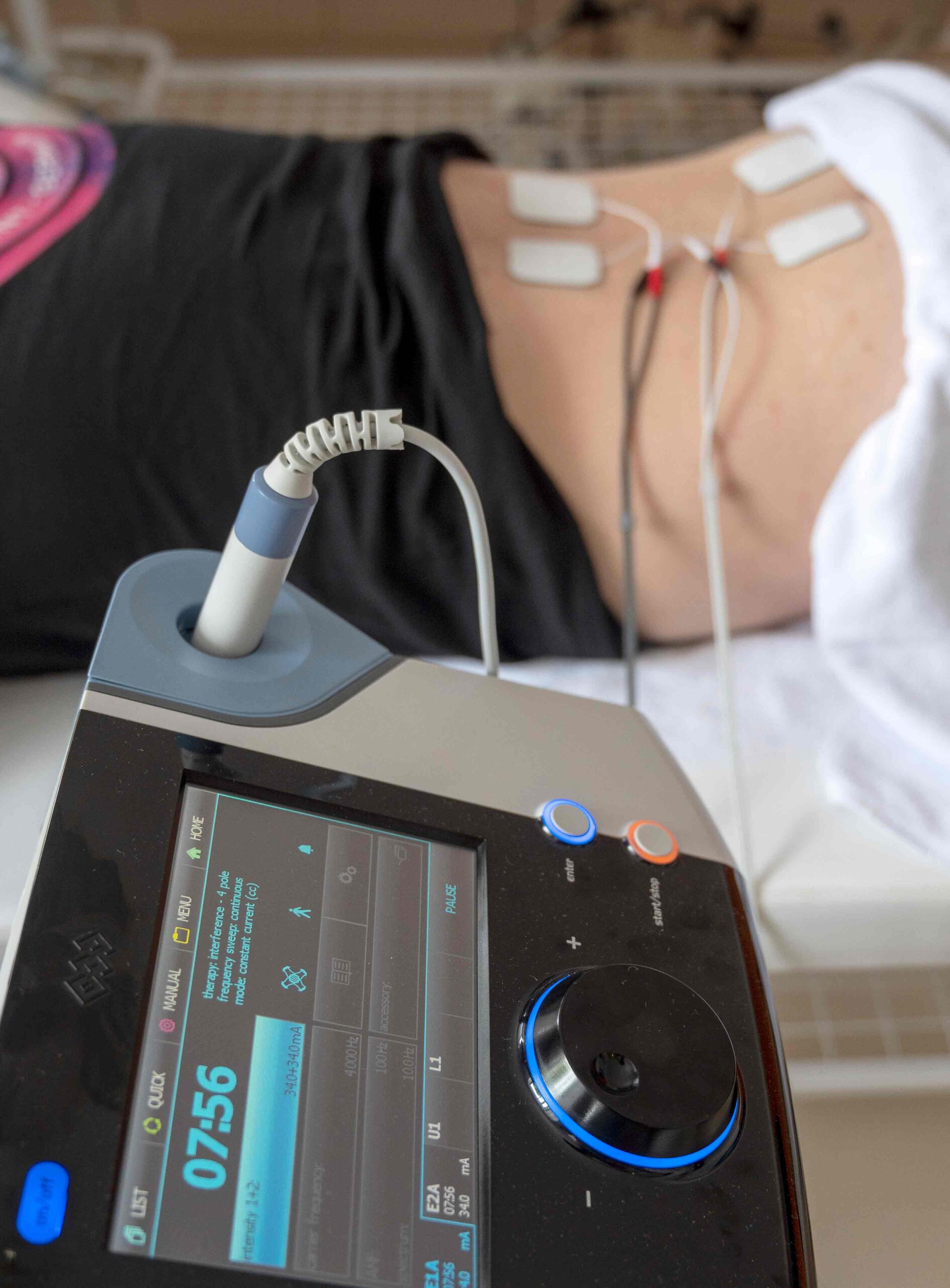
Various physical therapy methods are used in the treatment of a herniated disc, depending mostly on the patient's health condition and previous treatment. Today, the treatment of a herniated disc in Serbia uses the most advanced devices that are also used in clinics in the most developed countries. The most effective treatment methods have proven to be:
Spinal decompression is one of the oldest ways to treat a herniated disc. This approach is based on the assumption that a mechanical cause of back pain should be treated by mechanical means. In the past, this was done by stretching the muscles while hanging upside down. Today there are modern devices and aids, such as a decompression table or decompression belts, which you can use every day.
Despite successful treatment methods, patients' experiences are very different. You may hear that the treatment was unsuccessful or that the pain reappeared after a longer or shorter break. So that this does not happen, place your trust in dedicated experts who will at all times know what they are doing and why. Their expertise is of crucial importance, and the other key factor in treating a herniated disc is you yourself. If you truly want to recover for good, be disciplined - after recovery and the end of physical therapy, continue exercising every day for the rest of your life. We know it is hard to keep this up, but it is not impossible. Only in this way will you prevent the recurrence of this truly uncomfortable condition.
The most common cause of long-lasting and unsuccessful treatment of a herniated disc is treating the consequences and not the cause. That is why, after recovery, it is important to apply preventive measures and eliminate bad habits. Here are a few suggestions with which, with small changes, you can ensure the health of your spine.
Surely the most important fact to know about a herniated disc is that with quality and appropriate rehabilitation the discs can regenerate. This is achieved through corrective exercises in which the spine returns to its natural position where there is optimal loading of the discs. Exercises that are not burdensome, not too demanding and do not take much time are recommended. Their role is first to relieve and then to eliminate the pain. Physical therapy with kinesitherapy is carried out continuously, usually every day.
An individual approach is extremely important, in which the appropriate load is determined for each patient and the degree of spinal damage. Discipline and continuity are important both at the beginning and later on. Only by relieving and stabilizing the spine does gradual regeneration of the disc occur.
A well-planned physical therapy, combined with strong will and motivation, can certainly lead to a herniated disc being permanently cured. It will also be necessary to give up some old bad habits that led to the condition in the first place.
It is time for you to devote yourself to your health and return to a life without pain. You can schedule an appointment for a free examination by calling 0601343303 or simply send us a message via the contact form below.
When it comes to assessment and the length of recovery, our team will set out and provide the necessary guidance toward a faster and better recovery. Still not sure? You are just one click away from a free consultation.
Call now to schedule 060/134-3303
Related services: for a herniated disc we recommend kinesitherapy and TECAR therapy. To book an appointment, schedule an examination.
@2023 - Fizikalna terapija Beograd - Dynamic Fizio - Sva prava zadržana