
KNEE PAIN - when every step hurts
Knee pain is one of the common problems of everyday life, and it can affect people of all age groups.
Are you bothered by knee pain? Don’t worry, statistics show that there is no person who has not felt these unpleasant pains at least once.
Of all the joints in our body, the knee bears the greatest load. When we are in a bent position, the knee carries as much as 90% of body weight, and 70% when we stand upright. It is therefore no surprise that there is a very high level of risk of injury and disease of the knee.
Although this type of pain can be caused by various factors, complete recovery is possible in 90% of cases. The remaining 10% usually involve severe damage in which surgical treatment is necessary.
What does knee pain look like?
The symptoms of knee pain mostly present as:
- weakness and instability in the knee
- swelling, pain and stiffness
- inability to bend the knee joint
- cracking in the knee joint
In most people it most often occurs when walking, that is, when putting weight on the leg. Knee pain can also occur at rest, which is a more serious symptom for which it is necessary to seek the advice of a professional.
The pain may be accompanied by difficulty bending the knee, swelling, redness or stiffness. Knee pain with swelling most often indicates a knee injury. In addition to injury to parts of the knee joint, such as soft tissues or ligaments, inflammatory processes are also possible. Tendon inflammation is one such example. Also, deformities of the foot and knee can over time cause swelling of the knee.
When cracking is heard during knee movement it usually involves a degenerative condition. Namely, a healthy knee requires shock absorption, and this role is played by cartilage. The inability to stimulate the cartilage cells (chondrocytes) can lead to thinning or deterioration of the cartilage. Such a condition is considered degenerative, and it can also lead to contractures, that is, a limitation of mobility in the knee joint.
The pain most often occurs as:
- Knee pain when walking
- Knee pain when running
- Morning stiffness of the knee
- Knee pain when squatting
- Knee pain when bending
- Knee pain on the inner side
- Pain behind the knee
- Pain in the legs below the knee
- Knee pain originating from the spine
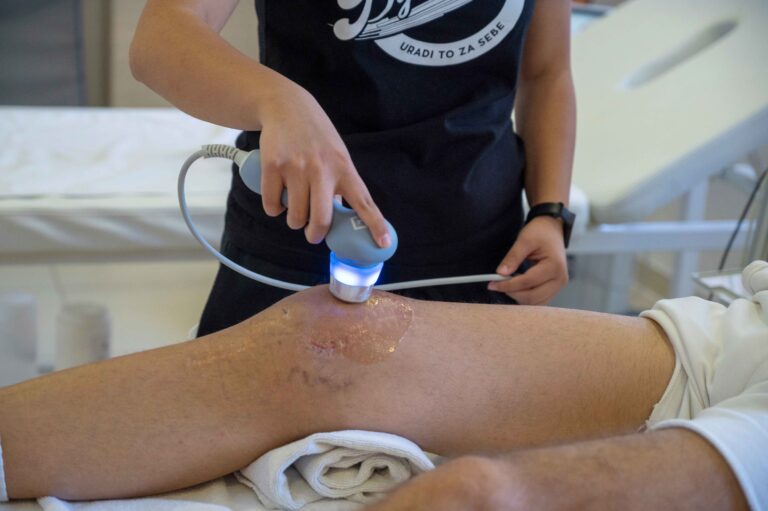
Knee pain when bending
Pain that occurs when bending the knee may indicate a meniscus injury. The meniscus is the part of the knee located between the thigh bone (femur) and the lower leg bone (tibia). It is in fact a part of the cartilage that regulates movement and provides functionality to the joints. In each knee there is an inner and an outer meniscus.
A sudden movement and shifting of weight onto the knee can tear the meniscus that connects the thigh bone to the lower leg. This is followed by difficulty moving and stiffness of the knee.
Pain when bending more often appears on the inner side of the knee because the inner meniscus is more prone to slipping out and to injury. This is not the case with the outer meniscus because a ligament, that is, connective tissue that links the bones, runs alongside it and does not allow it to move easily. Also, pain when bending can occur if there is a Baker’s cyst, which will be discussed a little later.
Knee pain from the spine and pain behind the knee
Patients often complain that they feel pain in the knee, but it then turns out that the problem is not in that part of the body, but somewhere else. Most often, pain from the spine is reflected as pain in the knee.
Knee pain from the spine can be felt when a certain nerve coming from the lumbar spine is compressed. It creates the impression that the pain is in the knee, while it is actually only transmitted from the spine. Also, if some other nerves are compressed, it can be reflected as pain behind the knee. That is why it is crucial for successful treatment to discover the true cause of knee pain.
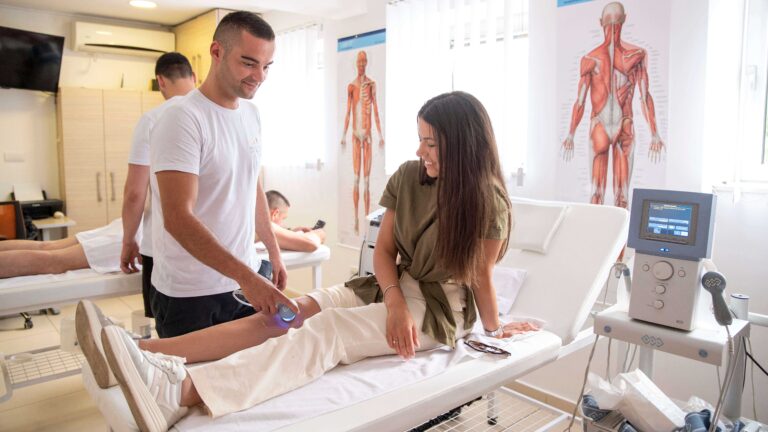
The most common reasons for knee pain
Knee pain most often arises as a consequence of mechanical factors, such as blows, fractures, contusions, sprains, dislocations, or a sudden change in body position during landing or change of direction. In addition to mechanical factors, physiological inflammatory processes can occur in the joint, which, for example, can arise as a consequence of bacterial infections. Of course, the natural aging of the body, genetic factors and other diseases can also lead to knee pain.
Knee pain can be acute and chronic. Acute pain is most often caused by an injury to the knee joint, ligaments or tendons. Ligaments connect bones, and tendons connect muscles to bones, and when one of these connections is broken, pain occurs. Acute pain usually arises as a consequence of a fall, accident, or excessive load on the joints and muscles.
You will feel the pain when you bend the leg or joint, or when you climb stairs. After rest and adequate care, acute knee pain should disappear within a few days. During the recovery process, various braces and orthoses can help by giving the knee stability and calming the painful area.
Chronic knee pain can arise as a consequence of infection or wear of the knee joint. The symptoms gradually intensify, and sometimes they may even disappear, only to reappear when you physically strain the body. In the case of chronic pain it is necessary to consult a doctor for further treatment.
Since knee pain can arise as a consequence of a large number of factors and present in various ways, before going to the doctor try to determine exactly where your knee hurts. Does it occur while walking, running or while at rest? Does your knee hurt while climbing stairs or when you bend the leg? Do you have a feeling of instability? Does swelling or redness appear?
How to relieve knee pain at home?
In case you feel knee pain, there are several things you can do to relieve the pain:
- Rest after an injury or sudden pain can help relieve the pain. When at rest, it is advisable to keep the knee in an extended position.
- Pain while walking can be relieved by using a knee stabilizer. In addition to making walking easier, the knee stabilizer will protect the knee and prevent further pain.
- Cooling has a soothing effect on pain, especially after a knee injury and mild swelling, but be careful. Avoid prolonged direct application of ice to the affected area. It is best to place a frozen item (e.g. a bag of peas) over a cotton cloth and hold it for about 10 minutes at a time.
- Appropriate medications, creams and gels can also be helpful. Among medications, ibuprofen can be effective and may help with acute pain. In consultation with a doctor, or on your own, find out which is the best cream for knee pain. If it does not pass, it is necessary to seek professional help.
- Knee pain – a natural remedy. If you do not have the opportunity to consult a doctor, a natural remedy for knee pain can also help you– comfrey gel. You can make it yourself if you have the root of the comfrey plant and milk. Chop 50 g of comfrey root and add it to half a liter of boiling milk. Cook for another 10 minutes, remove from the stove and leave to cool. Dip a piece of gauze into the liquid, wring it out and place it on the painful spot. Wrap clear film over the gauze. Keep the gauze on for at least one to two hours, and best of all overnight.
What must I not do when I have knee pain?
Most people who have knee pain or a knee injury often keep the knee slightly bent, and place an object beneath the knee to support it.
The truth is that this position can temporarily relieve the pain, but it is important to know that in this way the knee can become stiff, which later makes walking difficult and requires surgical intervention.
The most common causes of knee disorders
In younger people the most common causes of knee pain are injuries to the ligaments and meniscus due to strain, especially in athletes. In older people it is usually a matter of degenerative diseases and other inflammatory processes. Genetics, as well as physical (in)activity, also play an important role.
Physical activity is important because only strong muscles stabilize the knee joint and prevent it from being overloaded. However, excessive physical activity can also lead to damage to the joint due to prolonged and excessive load. This often happens with professional athletes. Below are the most common causes of knee disorders:
- Knee injury. Knee injuries most often occur during sports activities due to high physical load or an inadequate body position. The meniscus and the anterior cruciate ligament, which serves to stabilize the knee joint, are most often affected.
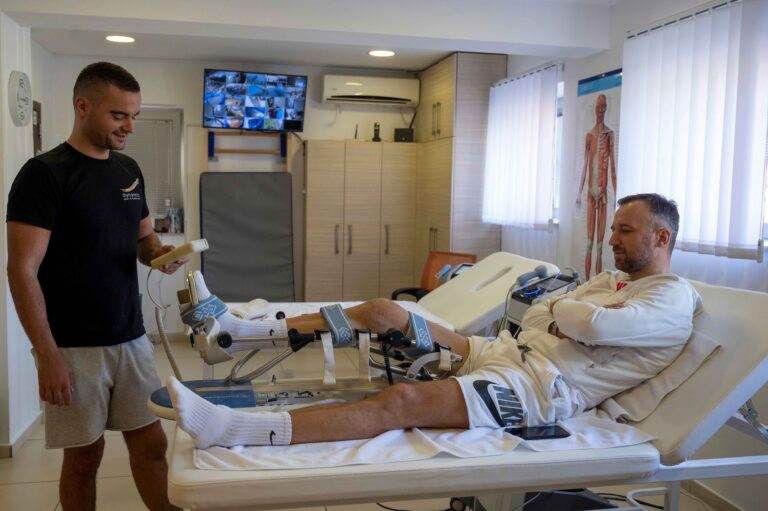
More serious injuries are treated surgically, while milder injuries are successfully treated with physical therapy. - Limited movement (knee contracture). Limited knee movement or knee contracture occurs relatively often after injuries or operations. Before or after surgical procedures, the knee is placed in a state of rest using a cast, bandage or splint. When the recovery period begins, it is important to start bending the knee as soon as possible in order to restore mobility and synovial fluid to the joint.
To achieve faster mobility after surgical interventions, therapy with continuous passive mobilization using a CPM device is effective. In addition to the knee, the CPM device can be used for therapy of the elbow, hip, shoulder joint and ankle joint. - Patellofemoral instability. During certain movements the kneecap shifts and moves out of its usual position. Treatment is carried out with rest (immobilization), and then with physical therapy. In rare cases, surgical intervention is necessary.
- Iliotibial band syndrome. The iliotibial band (ITBS) is a ligament that extends from the outer side of the thigh to the outer part of the knee. Due to friction against the bone, this ligament can become irritated and lead to swelling.
It most often appears in people who run regularly. The knee pain usually subsides once the injured area warms up. If the injury is more serious, the pain will become stronger and in that case medical intervention is necessary. - Osgood-Schlatter disease. It most often occurs in boys up to 18 years of age whose bones and other parts of the knee are still developing. A painful lump or swelling may appear below the knee. The condition can worsen due to excessive physical activity, and as physical activity decreases the pain also subsides.
- Jumper’s knee. Jumper’s knee usually occurs in athletes due to chronic damage to the tendon that extends the knee. Knee pain occurs while running or jumping. Treatment is carried out with rest and the use of appropriate medications (analgesics).
- Prepatellar bursitis. As a consequence of trauma or due to the deposition of crystals, inflammation of the bursa located on the front of the knee can occur. It occurs in patients who, most often due to the nature of their work, spend long periods in a kneeling position. For this reason this type of pain is popularly known as “floor-layer’s knee”.
Treatment is carried out with rest and analgesics, while in more severe cases the bursa needs to be drained. - Pes anserine bursitis. It represents inflammation of the bursa located beneath the pes anserinus tendon in the knee. The cause of the inflammation may be excessive physical activity, and it often occurs in people who suffer from diabetes or have insulin resistance. The pain in the knee manifests in the inner part of the knee, and pain below the knee, redness and elevated temperature often occur. In most cases it is treated with the application of cold compresses and anti-rheumatic ointments.
- Arthritis of the knee. Like any other joint, the knee can be affected by rheumatoid arthritis. The disease can develop suddenly, and a large amount of fluid is often present in the knee. The diagnosis is usually defined on the basis of analysis of the synovial fluid from the knee. In a joint affected by arthritis there is always a large amount of white blood cells (leukocytes). In degenerative diseases and injuries the number of white blood cells is low.
- If you have difficulty bending or extending the leg, the knee is painful and stiff, and after prolonged movement swelling occurs, it is possible that this is osteoarthritis. All of the listed complaints arise as a consequence of wear of the knee cartilage.
The disease occurs more often in people over 65 years of age, but younger people are not spared either. It most often occurs in those people who have overloaded the knee too much or have had injuries to various parts of the knee. - Inflammatory arthritis. The symptoms of this type of arthritis are knee pain, nausea and vomiting. As with other autoimmune diseases, the immune system, which should fight against microbes, mistakenly attacks a part of the body, in this case the knee.
- Knee pain due to gout and CPPD. Gout is an inflammatory arthritis that arises due to a high level of uric acid in the blood. This happens due to improper functioning of the kidneys, urinary infections, inflammation of the bladder and similar bacterial infections. Uric acid that remains in the body causes sudden severe pain in the joints, swelling, redness and inability to move.
The disease called calcium pyrophosphate dihydrate deposition (CPPD) is a type of arthritis that, if left untreated, can lead to degeneration, inflammation and disability. There appears swelling, redness and pain. - Septic arthritis. An extremely painful infection of the joint that arises when microbes reach the joint through the bloodstream and infect it. The pain is very strong and intense, and it often arises as a consequence of open wounds.
- Knee pain due to gonarthrosis. Gonarthrosis is a common degenerative disease that begins with mild pain that occurs with greater physical load. The pain is periodic, so visits to the doctor are often postponed. That is why the diagnosis of gonarthrosis is established several years later compared to the first signs of the disease.
In the initial stages of the disease, pain occurs when going down the stairs. As the disease progresses the pain is felt even during everyday walking, and sometimes even while lying in bed. Gonarthrosis requires a visit to the doctor and further treatment. - Baker’s cyst (popliteal cyst). A Baker’s cyst is a cavity located at the back of the knee that is filled with synovial fluid. If the cyst is large, it can create a feeling of tightness and cause pain behind the knee. A Baker’s cyst can rupture and its contents can leak into the lower leg. In adults this problem is usually associated with gonarthrosis.
A Baker’s cyst is treated by draining the contents from the knee and applying local corticosteroids that are used to relieve inflammation.
How to cure knee pain?
In the case where the knee injury occurred during a fall or in a traffic accident, and the pain is sharp, stabbing and prevents putting weight on it, it is advisable to have imaging done.
Usually an ultrasound of the soft tissues of the knee is performed, or an MRI as the best insight into damage to all soft tissues. An X-ray will give insight into the skeletal system and whether, during the physical force, there was a shift of the bones in the knee.
If the pain appears suddenly and the painful spot is red, and there was previously no load or injury to the knee, it would be advisable to do a blood count. It will show whether inflammation has occurred in the body. Specific orthopedic tests will resolve the dilemma of whether it is an injury to the ligaments or the meniscus.
How can physical therapy help in treatment?
The first step is an examination by a specialist in physical medicine and rehabilitation – a physiatrist or orthopedist. Based on the examination and depending on the injury or disease, an individual plan and program of therapy is created.
Physical therapy first aims to relieve the pain, and after that kinesitherapy is usually performed.
The length of rehabilitation depends on the degree and type of damage present in the knee, as well as on the body’s reaction to therapy.
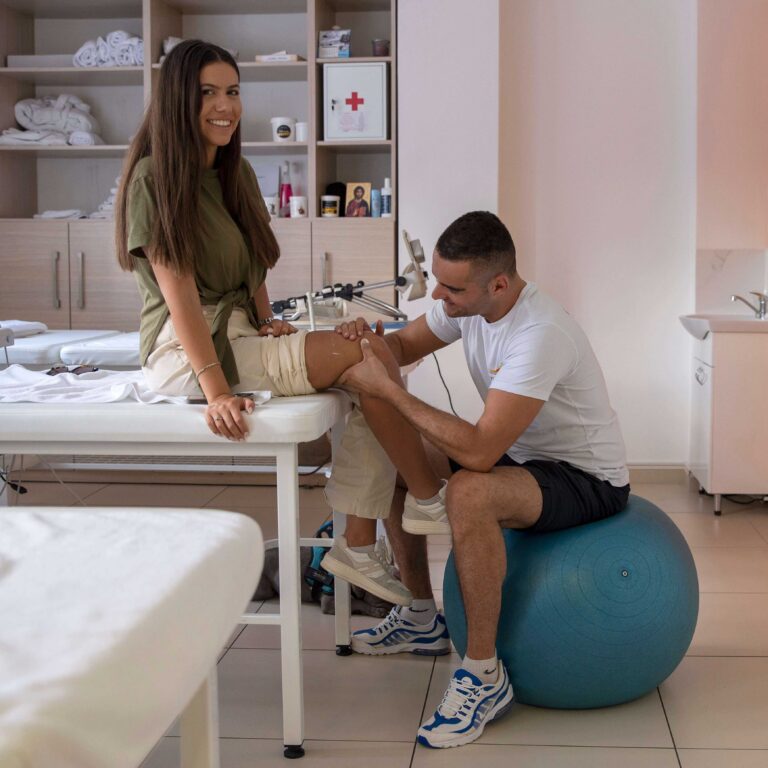
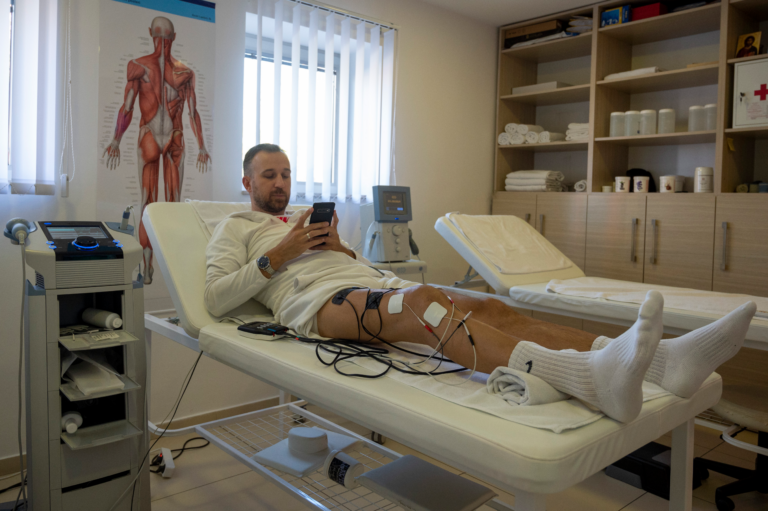
Within physical therapy, various methods are used, such as:
- electrical currents
- Ultrasound
- laser therapy and magnetic therapy
- TECAR therapy, which encourages faster tissue regeneration and faster recovery
You do not have to get used to knee pain. Don’t believe it? We will remind you of the statistics from the beginning, which say that recovery from knee pain is possible in 90% of cases. With the use of the most modern equipment, a professional team and an individual approach at the Physiotherapy Center Dynamic Fizio knee pain will become your distant past as well. The sooner you start therapy, the greater the chances of recovery.
Call us at the phone number 060/134-3303 or send us a message via the contact form and book your appointment. The first examination is completely free.
We look forward to seeing you and to your recovery.
Related services and exams: FMS testing, kinesio taping, orthopedic examination. For an assessment and treatment plan book an examination or call 060/134-3303.
Book your first appointment for free!
When it comes to assessing the length of recovery, our team will determine and give the necessary guidelines for the fastest and best recovery. Not sure yet? You are just one click away from a free consultation.
Call now to book 060/134-3303
Related services: for knee pain we recommend kinesitherapy, TECAR therapy and electrotherapy. To make an appointment book an examination.