Back pain - how to finally get rid of the discomfort?
This is the text that will give you insight into the causes and answer the question of how to finally free yourself from this unpleasant condition.
There is hardly a person in the world who has not felt back pain at least once.
You probably already know very well how much back pain deprives us of comfort that we take for granted. At the same time, this pain reminds us in an unpleasant way of the importance of healthy habits.
And while we try to ignore it, it can intensify, become unbearable and limiting. Whether you are troubled by pain in the upper, middle or lower part of the spine, you are in the right place.
This is the text that will give you insight into the causes and answer the question of how to finally free yourself from this unpleasant condition.
Back pain and understanding its causes
The first step toward overcoming back pain (also called dorsalgia) is recognizing and understanding the causes behind it.
Estimates suggest that 80-90% of people experience back pain, so it is no wonder it is considered an epidemic of our time. The reasons back pain occurs can vary, ranging from poor habits to stress to genetics.
To understand what causes back pain, we will first briefly review what makes up one of the most important organs in the body – our spine.
Why back pain occurs
The foundation of the spine is the skeleton, that is, the bony part where the joints allow movement, and the muscles carry it out. Without muscles, our body could not remain in an upright position. Weak muscles lead to poor posture and are the most common cause of pain in the back and lower back.
With age, muscle tone is lost, which makes muscles prone to injury.
The spine is made up of vertebrae, between which are intervertebral discs (discs) that enable movement in all directions. Because of their high water content, we also call them water cushions.
After the age of thirty, this fluid decreases, so the spinal discs become more easily irritated. The discs are soft, elastic and can cushion the load on the spine, just like the muscles achieve through their tension and tone.
The discs are protected by ligaments (connective tissue) positioned on the sides.
Causes of back pain
There really is a large number of reasons why back pain occurs, and among them the most common are:
- Incorrect body position, that is, poor posture. Prolonged sitting with a hunched spine, as well as incorrect posture during everyday activities, can strain the muscles, cause pain and lead to spinal deformity (so-called kyphosis).
- Certain occupations are at greater risk precisely because of prolonged incorrect body positions. These include people who do heavy physical work and who sit in front of a computer for long periods, as well as drivers, musicians, surgeons, homemakers…
- Excessive strain and lifting loads without proper technique can cause injuries to muscles or ligaments and result in back pain.
- An unsuitable pillow and mattress that do not adequately support our body during sleep. A high pillow raises the head relative to the neck, while a low pillow lowers the head relative to the neck.
- Lack of regular physical activity leads to obesity, muscle weakness and imbalance in the body, which increases the risk of pain. Even when you do not have time for a workout, ordinary muscle stretching, especially after prolonged sitting, can help.
- Injury or trauma, such as sudden blows and falls, can cause injuries to the spine, discs or ligaments. Lower back pain can also be caused by some harmless situations, such as the sudden braking of a car. As a result of trauma, spondylolisthesis can occur, that is, the forward slippage of a vertebra.
- Stress and anxiety affect not only the psyche, but the whole body, leaving consequences even in a physical sense. Emotional stress and tension can cause cramping of the back muscles and lead to pain. Stress gradually bends us into a hunched position in which we are unable to breathe air deeply into the lungs. In addition, knots form on the back due to the cramped position.
- Smoking reduces the flow of oxygen in the body and impairs the blood supply to the discs, which accelerates degenerative changes.
- Aging also leads to degenerative changes in the discs and joints, which can cause back pain. One such change is vertebral fracture, which occurs especially in the population of older women suffering from osteoporosis. As a consequence of degenerative changes in the spine, a narrowing of the spinal canal – spinal stenosis – can also occur.
Osteoarthritis
is a degenerative joint disease that causes pain and reduced mobility. A herniated disc or disc herniation represents a deformation of the nucleus of the disc between the vertebrae. Pain occurs when the inner part of the disc shifts and presses on the surrounding nerves.
- Scoliosis is an abnormal sideways curvature of the spine, to the left or right, which can cause back pain.
- Bone problems due to fractures and thinning of the bones (osteoporosis) can cause pain.
- Hereditary diseases, that is, the genetic factor.
- Infections of the spinal structures and tumors can lead to back pain. Fever and chills, especially following an illness, may potentially indicate a spinal infection. Signs of cancer development may potentially include weight loss and pain at night or at rest.
What exactly does back pain indicate?
Back pain can appear suddenly or gradually, it can be mild or severe in intensity, but it is important to know that severe pain is not always a sign of a serious illness.
It most often occurs in people over 30 years of age, but it increasingly appears in young people between 13 and 19 years of age as well. Back pain can be acute, subacute and chronic.
Acute pain is usually stabbing, and mild or moderate in intensity. Mobility is limited, and getting up on one’s own is difficult or impossible. This condition should not last longer than a few days or weeks.
It mostly arises as a consequence of arthritis or mechanical damage during a fall or strain.
While subacute symptoms last longer than six weeks, chronic back pain lasts longer than three months. It develops gradually and progressively. The causes are numerous and varied, so an expert opinion and assessment are necessary. Treatment is carried out with the application of appropriate therapy.
Back pain can be limited only to the spine or it can spread to other parts of the body. Depending on the location of the pain, back pain can manifest as:
- Upper back pain
- Lower back pain
- Mid-back pain
- Back pain on the right side
- Back pain on the left side
- Pain in the lower back and buttocks
- Back pain radiating down the legs
- Simultaneous back and chest pain
- Knee pain originating from the spine
Pain in the lower back - lumbar region
Unpleasant pain at the base of the back or in the lumbar region most often occurs during an injury, accident, sudden lifting of a heavy load or excessive muscle strain. Lower back pain can be caused by obesity, smoking and stress.
It can also manifest as a consequence of spinal deformity or other diseases such as arthritis.
It can appear as lower back pain on the left side and lower back pain on the right side.
How to relieve lower back pain?
For easing and relieving lower back pain swimming and brisk walking are recommended, and in the long term – weight loss.
If the discomfort lasts longer than three days, be sure to consult a doctor for advice. A physiotherapist can prescribe an appropriate treatment and show you effective exercises.
You can relieve lower back pain with hot or cold compresses. Alternating hot and cold therapy is recommended, and it is advised to first place a bag of ice or frozen vegetables on the sensitive area.
Wrap the ice pack in cloth to protect the skin and hold it on the painful spot for 10-15 minutes. After a few days, switch to heat therapy. Heat will release tight muscles, so a warm bath or a shower with warm water can be helpful.
Upper back and neck pain
Problems can appear as shoulder pain, neck pain and pain in the shoulder blades, and they often occur in combination with stiffness. They arise from stretching of the ligaments and tendons during sudden movements.
However, the most common causes of upper back pain are poor posture, stress and wear of the back muscles. Also, weak abdominal muscles, whose role is to provide strong support to the spine, can cause tension and back pain.
Pain between the shoulder blades
Due to neck weakness, pain between the shoulder blades, dizziness and migraines can appear. The good news is that pain in the upper part of the spine, with appropriate therapy, can be successfully eliminated within a few weeks.
Back pain that radiates
Numbness or weakness in the legs along with loss of sensation in the buttocks and the inner side of the thighs appear in Cauda equina syndrome. Loss of sensation and paralysis can become permanent if the disease is not treated quickly.
When pain in the lumbar region spreads down the back of the leg, the back pain is associated with damage to one or more nerves (radiculopathy).
When neck pain on the left side and neck pain in general spreads into the arms the diagnosis is cervicobrachialgia, while sciatica and lumboischialgia represent pain that spreads from the lower back down the legs. Burning, tingling and weakness in the arms and legs occur. In addition, the following symptoms may appear:
- Pain in the arms and legs
- Elevated body temperature
- Dizziness
- Loss of the sense of touch
- Difficulty controlling urination and stool
- Weight loss
- Insomnia
- Depression
Medications for back pain
We most often neglect back pain, which is the first mistake, since the body is thereby sending us an unmistakable signal that a problem exists and that something is not as it should be.
When determining the diagnosis, a specialist will ask you certain questions in order to determine the exact location and radiation of the pain, the time of onset and duration of the pain, as well as previous injuries and the results of previous therapies.
Treatment aims to remove the pain, but it is even more important to eliminate the causes that trigger back pain. For the purpose of treatment, the most commonly used are exercises and medications for back pain, and in certain situations surgery will be necessary.
Surgical treatment is applied when there is paralysis and when sensation in the extremities is lost. It is also applied in situations when all other methods of treatment have not produced results. Surgery is also performed in the case of a severe fracture and in emergencies. During recovery from surgery, spa treatment is recommended.
Medications for back pain that are most commonly used are analgesics such as paracetamol and anti-rheumatic drugs. Medications, however, will only provide momentary relief.
Besides analgesics, corticosteroids are also used, which are injected into the muscle. The best results have been achieved by so-called muscle relaxants, which have a relaxing effect on the muscles, thereby reducing pressure on the nerves.
There are also several treatment-approach techniques that have shown excellent results in practice. The approach methods are determined by the doctor after an examination. In certain situations, the doctor may require an X-ray, magnetic resonance imaging, other imaging or analyses.
As the most comprehensive approach, which takes into account the condition of the whole body, the so-called PNF method stands out. Massage can be helpful for releasing muscle tension. As the most effective method for eliminating discomfort caused by scoliosis, the so-called Schroth method has proven itself.
The Mulligan technique is a very effective and fast technique for eliminating pain in the joints. Physical therapy together with exercises is unavoidable in this case as well, both for recovery and for preventing the return of pain.
How can physical therapy help?
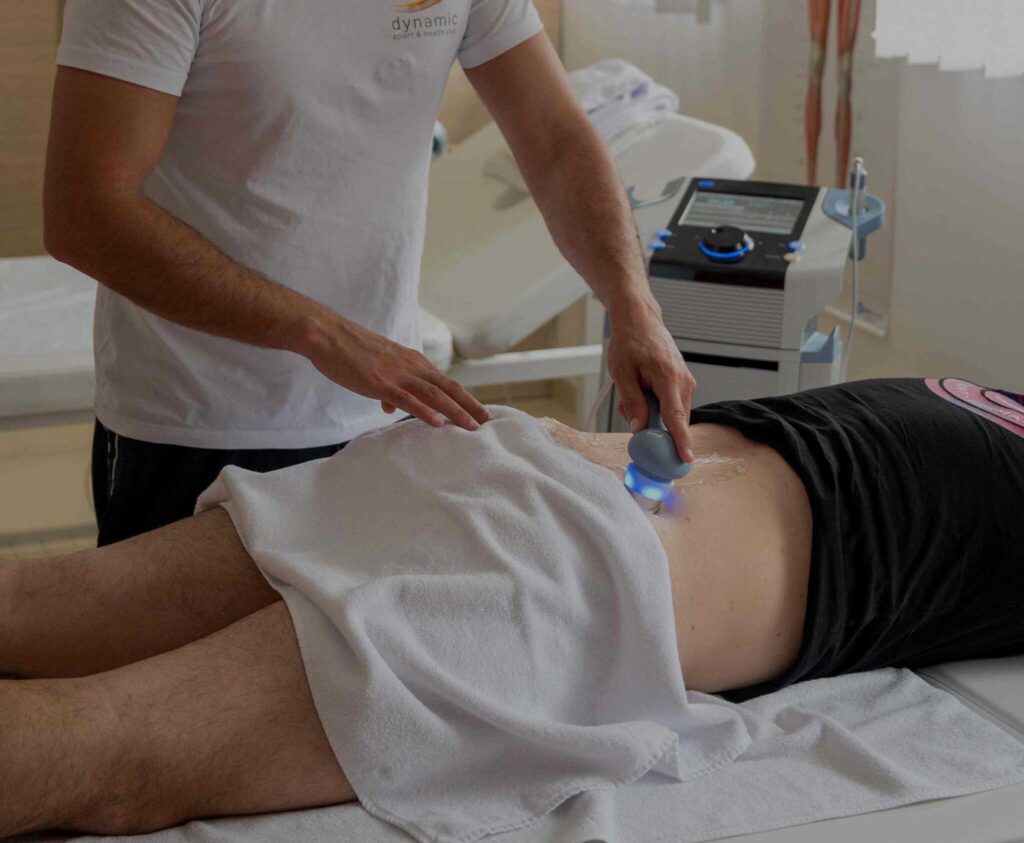
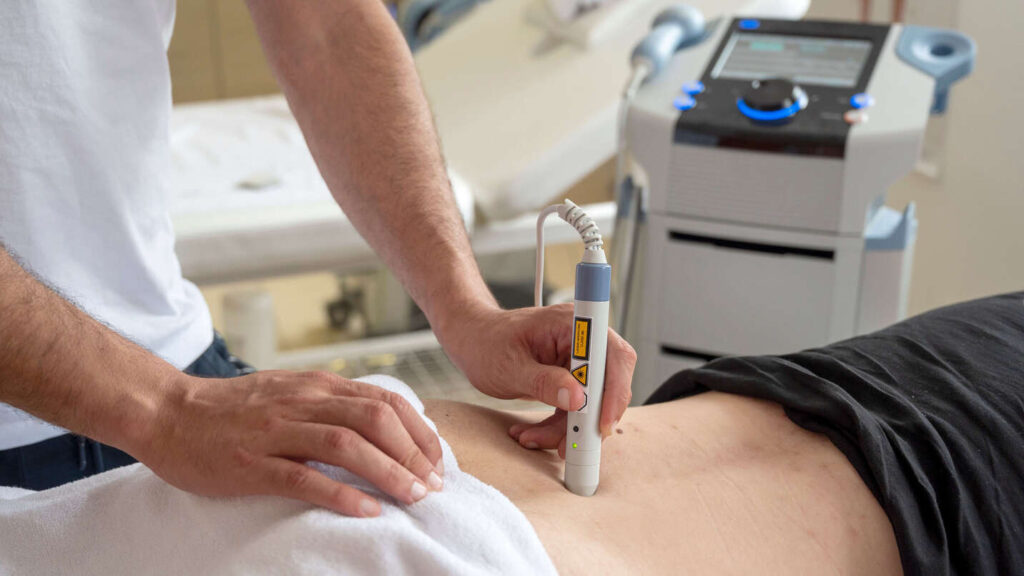
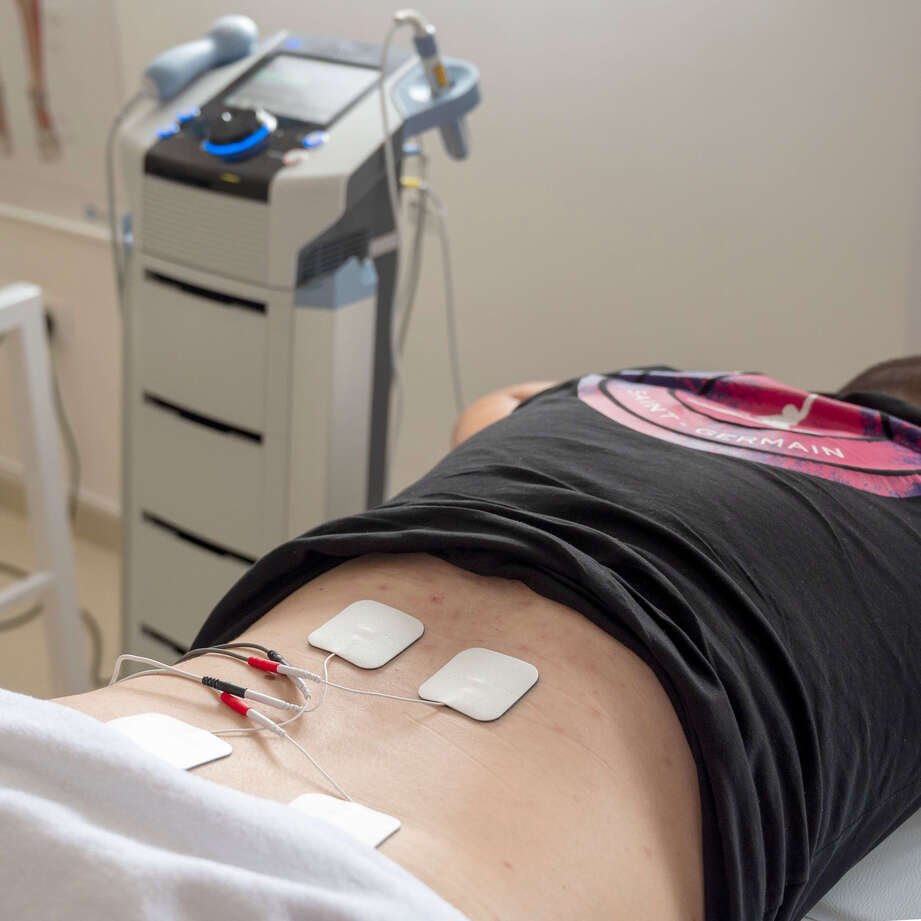
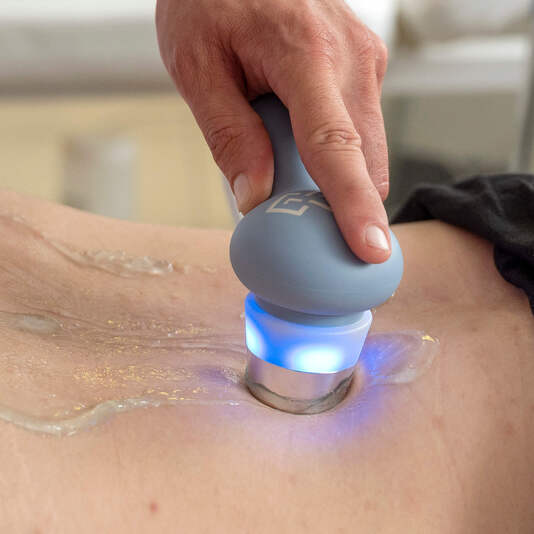
Physical therapy and kinesiotherapy are irreplaceable when treating back pain. Physical therapy offers several alternatives, such as:
- Ultrasound therapy
- An efficient, fast and non-invasive technique – HILT laser
- Targeted radiofrequency therapy combined with soft tissue massage – Tecar
- Stretching of the vertebrae – Traction
- Shockwave therapy with radial waves
- Electrotherapy (muscle electrostimulation – Compex)
- Magnetic therapy
- Thermotherapy
- Phototherapy
There are excellent exercises that a physiotherapist will show you, and which can also be done at home. For visible results, it will be enough to set aside 15-20 minutes a day.
An exercise program should include movement, dynamic exercises, loosening-up and stretching exercises. While one type of exercise improves mobility, another type of exercise strengthens the musculature.
One of the easiest and most accessible ways to stay active is walking. A daily walk is recommended because walking can reduce pain, prevent movement-avoidance behavior, and also has a positive effect on overall mood.
One thing is certain – with appropriate physical therapy you will never again have to postpone your plans because of back pain.
How to prevent back pain from occurring
Certain preventive measures can prevent the occurrence of muscle tension in the back. Therefore, first of all, you should find an adequate position when sitting and standing, with a suitable bed, pillow and work surface.
If you are in one position for a long time, take a break and stretch your muscles. Comfortable footwear, with a slight incline of a few centimeters, is very important.
When you lift heavy objects, do it with bent knees and rely on your legs, not your back. Although it is easier said than done, quitting smoking and a healthy diet are always advisable.
Swimming and brisk walking give excellent results, but also consider classic exercises that will relax and strengthen the back muscles. Also, do not forget to strengthen the abdominal muscles too, because it is precisely the abdominal muscles that provide strong support to the spine.
The best exercises for back pain on a physiotherapist's advice
As someone with many years of experience in successfully treating this kind of unpleasant pain, we recommend four simple exercises for relieving back pain. To perform the exercises you do not need any special equipment, so you can do them at home as well.
Exercises for back pain – shoulder blades
Sit on a chair without a backrest, straighten your spine and hold your head straight, then squeeze your shoulder blades together. Hold for five seconds, then relax. Repeat this exercise three to five times, twice a day.
Exercises for back pain with the knees
Lie on your back with your knees bent and feet on the floor. Using both hands, pull one knee and press it to your chest. Hold for five seconds, then return to the starting position. Repeat the same exercise with the other leg. Repeat each stretch two to three times, twice a day.
Exercises for back pain – the cat pose
Get on your palms and knees, then slowly arch your back, as if pulling your stomach toward the ceiling. Then slowly let your back and stomach sink toward the floor. Repeat three to five times, twice a day.
Exercises for back pain – bird dog
Lower yourself to the floor resting on your hands and knees, as in the previous exercise. Raise your left arm and right leg and at the same time extend them forward as far as possible. Hold the raised arm and leg parallel to the floor.
Make sure your hips are not tilted to one side. Hold for 10 seconds, then return to the starting position. Repeat five times, then switch to the other arm and leg and repeat the exercise.
By applying these and a large number of other effective exercises, back pain will gradually decrease, and you will return to an active life, without limitations.
If you need the most modern treatment methods that truly deliver results, call us at the phone number 0601343303 and book a free examination.
Related services and exams: physical therapy, pool therapy, physiatrist examination. For an assessment and treatment plan book an examination or call 060/134-3303.
Book your first appointment for free!
When it comes to assessing the length of recovery, our team will determine and give the necessary guidelines for the fastest and best recovery. Not sure yet? You are just one click away from a free consultation.
Call now to book 060/134-3303
Related services: for back pain we recommend kinesiotherapy, tecar therapy and electrotherapy. To make an appointment book an examination.