Neck pain - Cervical syndrome
A stiff neck and pain in the cervical region can be successfully treated, and just as before, you will be able to lead an active life.
Almost all everyday activities, even just looking at a mobile phone, lead to tension in the neck muscles, which causes neck pain. If we simply pay attention to the position of our body while reading this text, what will we see? A hunched spine, dropped shoulders, and the neck thrust forward.
Although this condition should not affect people under 40, due to the modern lifestyle, cervical pain affects the young and the old alike. Statistics show that women are affected more often than men.
The good news is that a stiff neck and cervical pain can be successfully treated, and physical therapy will certainly help you. Oh yes, that means you can turn your head freely, both left and right, without fear of sudden pain or an uncomfortable stiff neck.
In the rest of this text, we give you the answer to the question of which methods are used to treat the neck and how to free yourself from this unpleasant pain forever.
How does neck pain (cervical syndrome) develop?
The neck consists of seven vertebrae, and because of its important role in the functioning of the body, it is also called the cervical spine. In addition to providing strong support for the head, the neck is the pathway through which nerve impulses are transmitted from the brain to the rest of the body and back.
Besides the nerves, the cervical region contains a bony part, many muscles, and ligaments (connective tissue that connects bones). Neck pain usually occurs due to pressure on the nerves and vertebrae, as a result of muscle tension. Pain may appear for no obvious reason and disappear after a few days, when we speak of nonspecific pain; in that case, treatment is not required.
Although in the initial stage neck pain seems harmless and indeed most often is not a symptom of a serious illness, if it is neglected, symptoms such as headache, fatigue, and weakness may appear.
Every occurrence of pain interferes with full neck mobility, and may also limit the functionality of the entire body. In a later stage of the disease, cervical pain can lead to far greater problems and serious illnesses. Neck pain is the main symptom of a group of different conditions called cervical syndrome (syndrome of the cervical spine).

Symptoms, causes, and course of the disease
First develops limited neck mobility, that is, stiffness, while further nerve damage can lead to chronic problems. As the disease progresses, the intensity of the pain increases and other symptoms appear, and in some cases the pain may spread to the back of the head (the cervical part of the spine) and other parts of the body.
In more severe cases of the disease, degenerative changes occur. If the disease is not treated in time, a cervical disc herniation may develop. Pain caused by a herniated disc is often accompanied by sharp pain, burning, and tingling along the arms and fingers. In severe cases of cervical disc herniation, weakness in the cervical spine or loss of sensation along the arms may appear.
An aggravating circumstance in recovery from cervical spine disease is the wearing down of cartilage (connective tissue) as a natural process of the body's aging. Also, damage to the nerve structure can lead to so-called compression neuropathies, or in other words, damage to the nerve at the point of pressure. Anxiety, depression, and other psychological symptoms may appear.
If neck pain and stiffness appear suddenly, overnight, this may be a sign of a condition professionally called polymyalgia rheumatica (PMR). This inflammatory muscle condition mainly occurs in people over 65 years of age.
Neck pain rarely occurs as isolated pain. Most often, the pain spreads to the head, shoulders, shoulder blades, and arms and even into the ear or behind the eye. A feeling of weakness in the arms may also appear, along with muscle cramps and problems with circulation, and other similar symptoms
Neck and head pain
Sometimes every movement of the neck can trigger a headache that is usually called a tension headache. In some cases, neck pain is so strong that it leads to nausea or vomiting.
When neck and head pain occur, flickering before the eyes - white dots - often appears as well. In a certain number of people, simultaneous neck and head pain may indicate high blood pressure. For this reason, it is above all important to discover the true cause of the pain.
Pain in the neck and back of the head
When a dull pain in the back of the head appears together with neck pain, it may be a sign that the spine is compromised. There are several causes and several different types of pain in the neck and back of the head, depending on where the pain occurs.
When pain from the neck spreads to one side of the head, dizziness, nausea, and vomiting may occur. Visual disturbances, ringing or buzzing in the ears, as well as balance disorders, may indicate cervicocephalic syndrome (syndroma cervicocephale).
Head pain can also be caused by a pinched nerve in the neck. A pinched nerve can occur during a neck injury, neck muscle tension, or arthritis. The pain moves through the back of the head and is very sharp. This type of pain is professionally called occipital neuralgia.
A headache that begins with neck pain may also be a cervicogenic headache. It usually occurs after an injury caused by a sudden jerk or a tightened nerve in the neck (spasm). Sleeping position, arthritis, a neck sprain, or a fracture can also cause this type of headache.
You will recognize a cervical headache (cervicocephalic syndrome) by pain that spreads from the base of the skull to one side of the head. The neck is usually stiff, and pain may appear around one eye or during sneezing and coughing.
A headache can begin with neck pain and spread to the head, but the reverse situation is also possible, when the pain arises in the head and spreads toward the neck. In this case, tension headaches most often occur that create a feeling of tightening of the head around the forehead, while the pain affects the entire head and spreads further, to the neck and shoulders. Although the exact cause of tension headaches is still unknown, their development is associated with high stress levels and poor posture.
Migraines, as a strong and throbbing pain, can often spread to the cervical spine. Likewise, disorders of the lower jaw joint, which may arise from grinding the teeth (bruxism), can cause a dull pain in the temples. Due to fatigue of the lower jaw muscles, the pain can also be transferred to the neck.
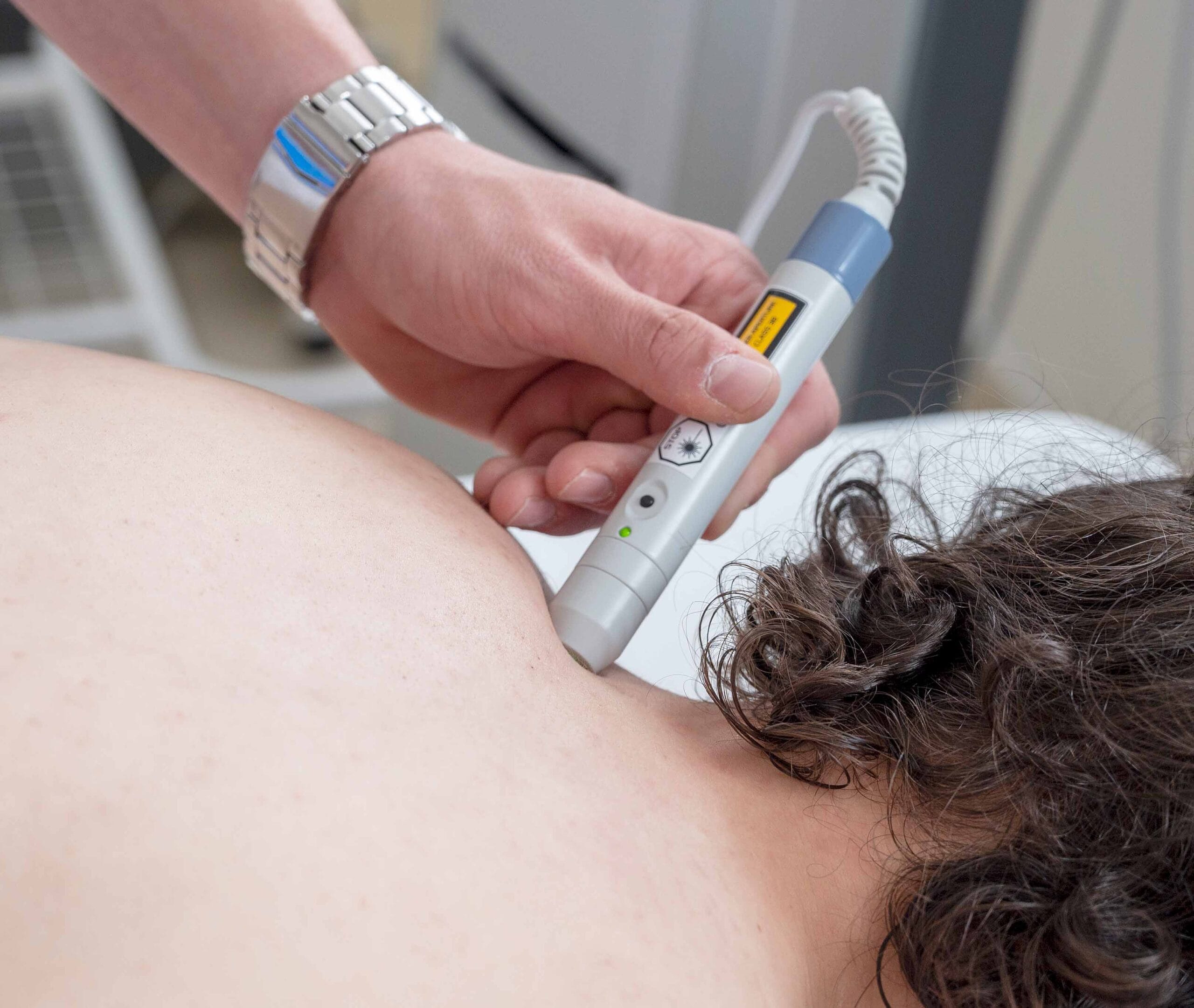
Neck pain on the right side and neck pain on the left side
Neck pain on the right side
Neck pain often occurs precisely on the right side, and sometimes it also spreads to the shoulder. This happens because most people are right-handed, which is why the right side bears a greater load, and the muscles a greater strain, resulting in pain. In addition to performing most tasks with the right hand, we also hold the computer mouse with it, which is why our right hand stays in an unnatural and static position for a long time.
Neck pain on the left side
Shoulder and neck pain - Neck and back pain
Most people have improper posture that strains one side of the body, and sometimes it is precisely the left side. A prolonged poor position or loading of one side of the back can lead to a pinched nerve in the neck, shoulders, or back. It manifests as strong pain in the back and muscle tension.
The pain can spread all the way to the arm and fingers, accompanied by tingling and loss of strength in the arms. We then speak of a set of symptoms we call cervicobrachial syndrome (syndroma cervicobrachiale).
When the pain spreads so much that it affects the forearm and upper arm, along with difficulty breathing and chest pain, we advise you to seek emergency medical assistance. This type of pain can potentially indicate a heart attack. The risk is increased in people who have high blood pressure, who are obese, or who have other symptoms that increase the danger of heart disease.
Shoulder and neck pain
Since you are stiff, neck pain and shoulder pain that radiates down the arm are most often felt when moving the head or neck. It can spread in the direction of the shoulders, shoulder blades, the front of the chest, and the arms.
Pain that descends from the shoulder down to the arm is most often caused by bone calcification. In the case of stiffness and limited neck movements we speak of painful cervical spine syndrome.
Neck and back pain
This type of pain most often worsens when the head is held in one position for a long time. This usually happens when we sit at the computer or drive a car for a long time.
You will feel pain in the neck and back of the head as tightening of the muscles and cramps in the neck region. The cause of the pain can be sensitive nerves and a narrowed space between the cervical vertebrae, which creates a problem with the muscles, ligaments, and other tissues.
Why does neck pain develop?
The causes of neck pain can be varied. Just as the pain can arise as a consequence of a prolonged and improper position, it can also be a symptom of a rheumatic disease or an infection in the area of the neck or head. In the case of an infection, the pain is accompanied by elevated temperature, stiffness, and limited mobility of the head.
Neck pain due to poor posture and physical inactivity
Unlike earlier generations, the person of the modern age barely moves at all. Without sufficient physical activity, we do not have stable musculature, so the muscles are not able to provide strong support to the spinal column. This condition first leads to tension in the neck, and then to pain.
The improper body position does not change even when we put down the phone or get up from the computer, because we assume the same position while driving a car. Professions that require a static neck position for a long period of time, such as dentists or hairdressers, often suffer from cervical syndrome. As the years of work experience grow, so does this problem become ever greater. If professional help is not sought in time, harmless tension of the neck muscles can turn into a chronic problem.
Neck pain due to a poor body position during sleep
You know that feeling when, from early morning, you are troubled by pain in the neck and head? An improper position during sleep, such as sleeping on your stomach or with a high pillow, can cause neck pain.
It is important to know that we can nevertheless influence a large number of these factors. If you like to sleep on your stomach, keep in mind that you are then turned to one side for several hours. Additionally, sleeping on the stomach can also strain the spine, especially if you do not have an adequate mattress.
Neck pain due to a traumatic injury
Sudden jerks, sprains, strains, or traumatic injuries that occur during a fall or by the action of a certain physical force can cause cervical syndrome. Traffic accidents, especially collisions that cause sudden trembling of the cervical region (so-called whiplash injuries), can cause severe pain. Spinal surgery can also be a cause of a painful neck. In some cases, neck pain is not felt immediately after the injury, but several days later.
Sudden turning of the neck or an improper movement, most often during sports or lifting weights, can also lead to a sprain or strain of the neck. A sudden and severe neck injury can lead to a disc herniation, and in extreme cases even to paralysis.
Degenerative changes in the spine and other diseases
Cervical syndrome can arise due to disorders or diseases that attack muscle tissue, bones, joints, or ligaments. Sometimes diseases of other organs (e.g., the heart and lungs), as well as diseases of the nerves (neuritis) can be a cause of a painful neck. The natural curvature of the spine, as well as the aging of the body, can likewise cause neck pain.
The most common cause of cervical pain is degenerative changes of the cervical spine, and in rare cases a tumor or meningitis. Degenerative changes in the spine that occur with the body's aging can lead to:
- reduced elasticity of the spinal column as a consequence of aging (spondylosis of the cervical spine)
- the formation of bony outgrowths (osteophytes)
- loss of bone mass (osteoporosis)
- degeneration or displacement of the disc (cervical disc herniation)
A herniated disc can cause narrowing of the spinal canal, exerting pressure on the spinal cord or nerves. This pressure can be very dangerous since almost all nerves pass through the cervical region to the rest of the body (arms, legs, chest, and abdomen). For this reason, the function of vital organs may be compromised.
Stress
Every time our body is exposed to stress, it releases adrenaline, which prepares the muscles for flight or fight. While people lived in nature, this mechanism functioned perfectly because the great muscular effort returned the adrenaline level to normal. With life in cities and office jobs, the high level of adrenaline does not subside, but remains in the body and causes tension.
For this reason, constant stress and worry can cause tension, that is, tightness of the neck muscles, and lead to the appearance of pain. Stress has a particularly negative effect on the muscle tone in those parts of the body where numerous nerve endings are located, and that is precisely the neck.

The best remedy for neck pain
Acute pain (initial, sharp, and intense pain) in the neck is best treated with heat, so for this purpose a warm compress, a bath, or a stream of warm water can be useful. The same applies to cold water. A massage from the shoulders to the neck will reduce muscle tension, and an appropriate painkiller can help relieve the pain. Doctors most often recommend analgesics with acetylsalicylic acid, of which the best known are Andol and Aspirin.
Even when you are troubled by stiffness, light physical activity is recommended, especially walking. If you were to stop being physically active entirely, that would lead to even greater physical stiffness.
Practice has shown that patients troubled by cervical pain most often first try to solve the problem themselves with various medications and gels. Professional help is usually sought only when the disease has advanced and when it has progressed to a chronic phase. It is important to note that, as with most diseases, for a complete cure it is best to seek help while the disease is in its initial stage so that the necessary physical therapy can be applied.
How to prevent a painful and stiff neck
There are several things you can do to reduce neck muscle tension and maintain neck mobility. Below we list examples of several small changes that can prevent and, in certain cases, alleviate or completely eliminate neck pain.
- It will sound like a trivial piece of advice, but take care of your posture. As much as we are all aware of the importance of sitting properly and standing upright, our neck is often thrust forward and our shoulders hunched. During work take a break, stand up, stretch, take a walk. Adjust your work surface and chair so that the monitor is at eye level, and your thighs and arms (on the keyboard) are positioned parallel to the ground.
- For milder forms of pain, cold or warm compresses that you keep on for 15-20 minutes can help.
- Sleep on your side or on your back, instead of on your stomach. If you sleep on your side, make sure that your pillow is not raised more under your head than under your neck.
- Choose a pillow that is neither too hard nor too soft. Experts advise using a memory foam pillow that easily adapts to the position.
- Buy a quality mattress.
- Avoid holding the phone with your shoulder while talking and doing something else at the same time. Hold the phone in your hand, or if your work requires long conversations, use a headset with a microphone.
- Regular exercise will help you strengthen and relax your muscles. Sport is not just a leisure-time activity, but a way to keep your body healthy and vital. Introduce physical activity into your daily schedule. Start doing simple exercises. Daily gentle stretching of the neck and shoulders will help you. Tilt and bend your neck forward, backward, left, and right. Make sure you perform the exercises for neck pain correctly, and a physiotherapist can best help you with that.
- Find time for rest and relaxation. Although this is easier said than done, reduce stress as a source of muscle tension and tension headaches. Think about what you can change in your daily routine so that you create time for physical activity, rest, and relaxation.
When neck pain requires treatment
Although pain in the cervical spine often passes on its own, there is also that type of neck pain that requires urgent medical treatment. A cervical disc herniation cannot be treated with painkillers; instead, it is necessary to involve a doctor. In certain cases, surgical intervention may also be necessary.
Treatment is necessary if neck pain occurs with the following symptoms:
- headache
- elevated temperature
- chest pain and shortness of breath
- slurred speech and blurred vision
- the appearance of outgrowths or lumps on the neck
- the appearance of pain that spreads down the arms and legs
- tingling of the extremities
- problems with the bladder or bowels
Most neck problems can be diagnosed and treated based on symptoms and a simple examination, so it is unlikely that special tests will be needed. For the treatment of cervical syndrome, if necessary an X-ray examination, a blood test, or magnetic resonance imaging (MRI) can be performed in order to rule out other potential causes of neck pain.
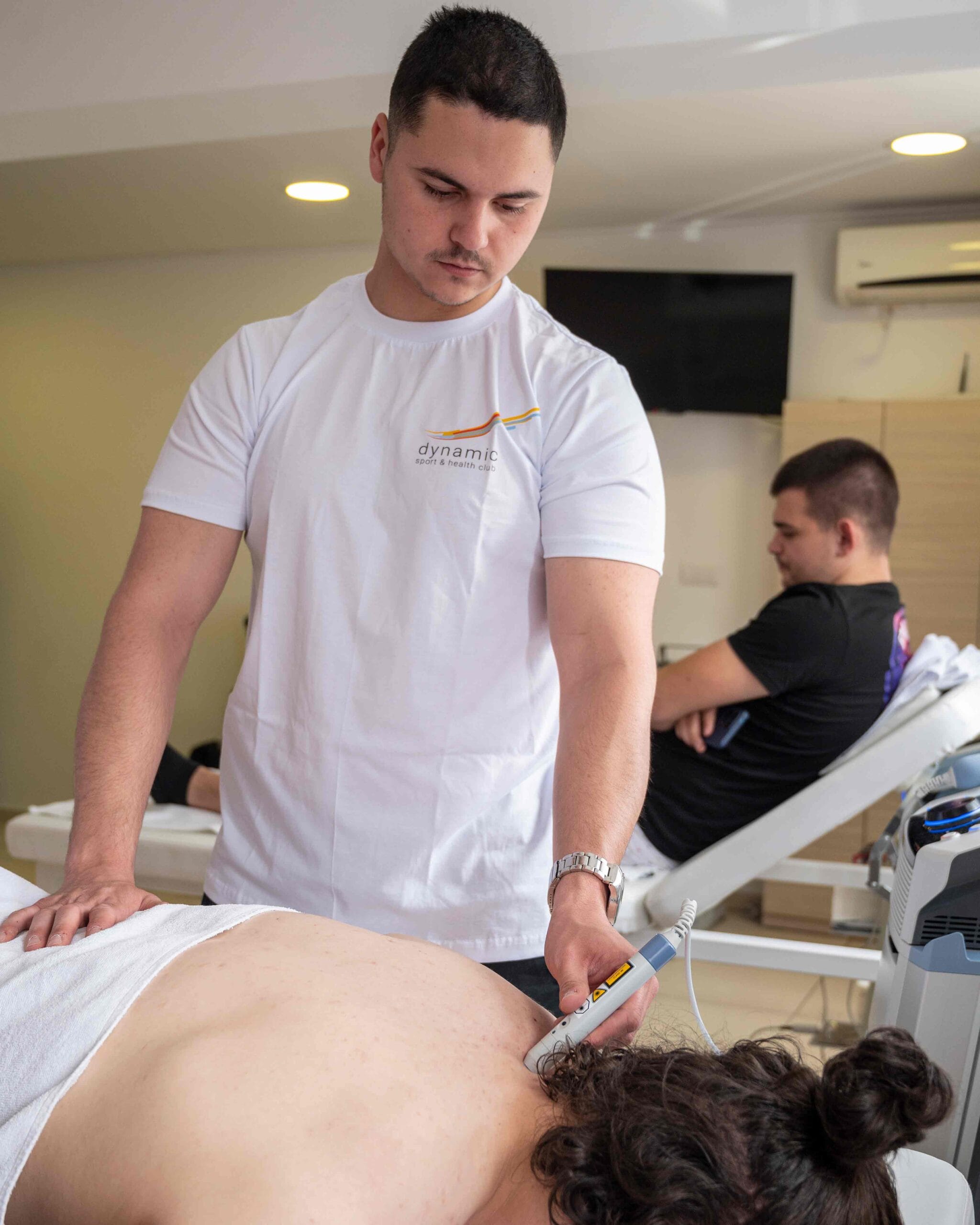
Diagnosis and treatment of neck pain
A professional will, above all, assess the degree of stiffness, the range of head movement in all directions, and muscle weakness. In most cases, cervical pain can be eliminated with physical therapy, with special importance given to corrective exercises and stretching exercises.
As a therapy for the purpose of treatment, the following can be applied:
- neck stretching - decompression
- transcutaneous electrical nerve stimulation (TENS)
- magnetotherapy (magnetic therapy)
- electrotherapy
- ultrasound therapy
- kinesitherapy, which includes general and specific exercises to increase the strength and mobility of the cervical spine, as well as the shoulder-blade region
When the pain is acute, various types of collars (the Schanz collar) are used for the purpose of treatment and pain relief. Of key importance are neck exercises which, when done regularly, eliminate the pain and restore full mobility to the cervical region. Kinesitherapy gives particularly good results.
At the modern Dynamic Fizio Physiotherapy Center, expert and professional therapists are available to you, who, along with a detailed examination, will give you an appropriate proposal for therapy and treatment. You will also receive the best advice on how to protect your neck muscles so that neck pain becomes a distant memory.
Regardless of the fact that the problems patients face are similar, every person and every pain has its own specifics. That is why every patient of Dynamic Fizio receives maximum attention and an individual approach. Neck pain (cervical syndrome) is successfully treated, and the sooner you start, the greater the chances of recovery. And one more piece of good news: the first examination is completely free. Contact us and begin the treatment of your neck pain.
Call us at the phone number 060/134-3303 or send us a message via the contact form below. We look forward to welcoming you.
Related services and exams: physical therapy, kinesio taping, physiatrist examination. For an assessment and treatment plan book an examination or call 060/134-3303.
Book your first appointment for free!
When it comes to assessing the length of recovery, our team will determine and give the necessary guidelines for the fastest and best recovery. Not sure yet? You are just one click away from a free consultation.
Call now to book 060/134-3303
Related services: for neck pain we recommend chiropractic, tecar therapy, and electrotherapy. To make an appointment book an examination.